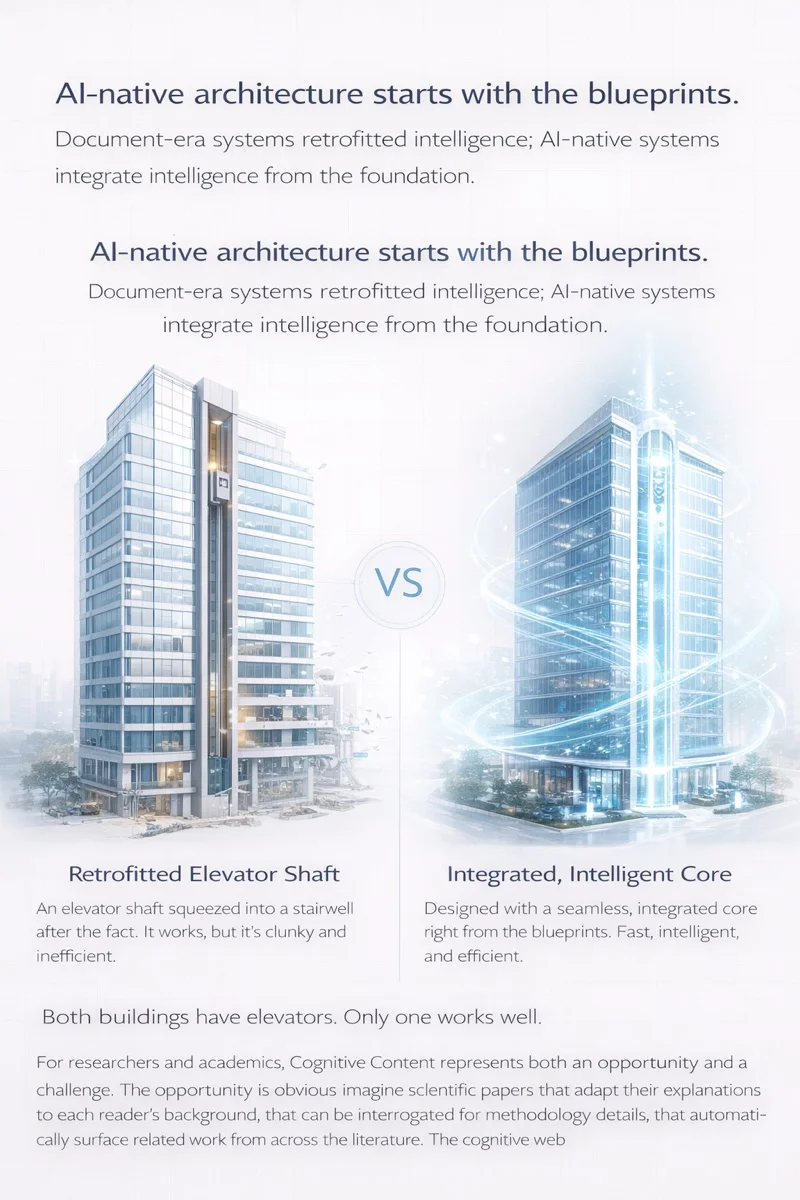
Where the static web ends and the thinking web begins. Peer-reviewed insights for academics, researchers, and technologists building the next generation of intelligent systems.
Explore Articles
In-depth explorations of the technologies, architectures, and paradigms shaping the cognitive web.
How static web documents are evolving into adaptive, context-aware systems that think, respond, and learn from every interaction.
A technical deep-dive into the layered intelligence architecture that enables content to reason, adapt, and evolve autonomously.
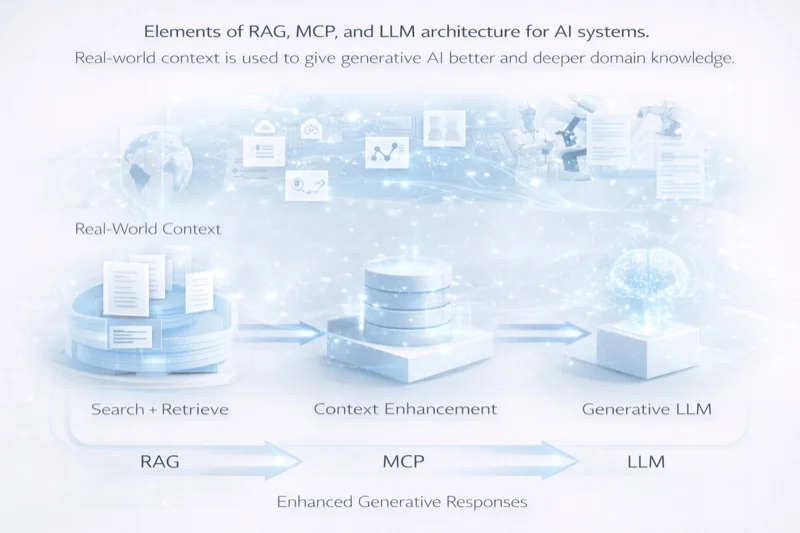
Moving past retrieval-augmented generation toward dynamic context synthesis and web-scale reasoning systems.
For thirty years, the web has been built on static documents — pages that sit inert until a human clicks through them. Cognitive Content ends that era.
We are building an AI-native paradigm where every piece of web content can think, adapt, converse, and evolve. Content that understands its reader. Interfaces that reason about context. Systems that learn from interaction and improve with every session.
This is not a product. It is a shift in how we conceive of information on the web — from passive artifact to active intelligence.

Content that senses context and reshapes itself in real time — adjusting depth, tone, and structure to match the reader's expertise and intent.
A composable stack of intelligence — from the rendering layer to the reasoning engine — each component independently evolvable and observable.
Built on open standards and designed for data sovereignty. Intelligence should serve its users, not extract from them.
Cognitive Content is the research and analysis arm of a broader ecosystem of AI-native technologies.
The parent intelligence layer — orchestrating the transformation from static documents to thinking systems.
AI-native products, consulting, and enterprise solutions for organizations adopting cognitive architecture.
Open-source infrastructure, education, and community resources. Free. Sovereign. Alive.
AI-driven procedural animation and visual rendering — describe a scene, the Weaver renders it.